


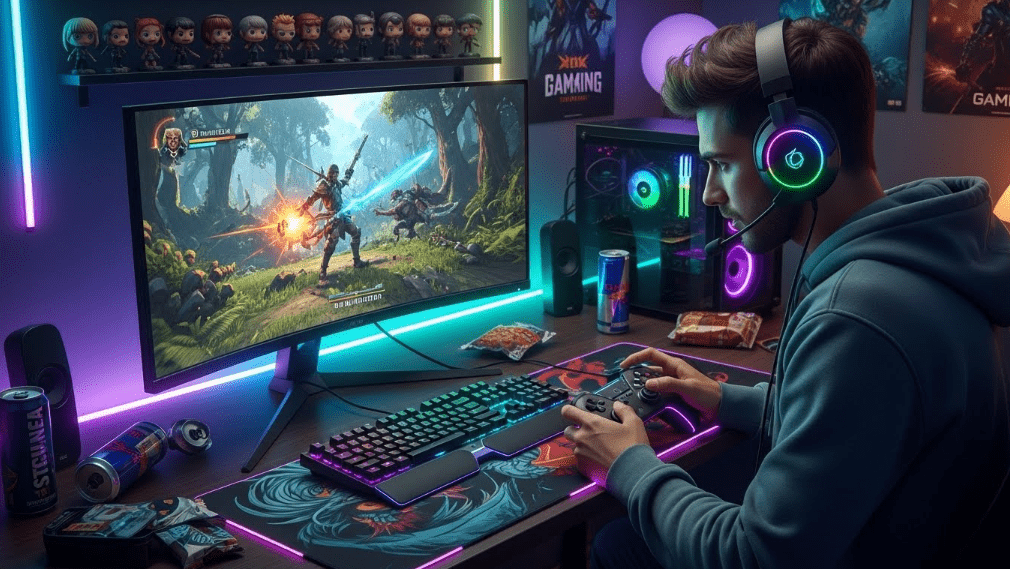
The landscape of human leisure has shifted more in the last decade than in the previous century. We have moved from being passive observers of media—watching television or listening to the radio—to being active participants in digital ecosystems. This transition into interactive spaces has redefined how we decompress, learn, and socialize. Whether it is through complex strategy simulations or the rapid-fire excitement of digital puzzles, the modern internet user is constantly looking for ways to engage their mind in a world that is increasingly built around the “reward loop.”
This shift isn’t just about the technology itself; it is about the psychology behind why we play. In a fast-paced society, the human brain craves a specific type of stimulation that combines the thrill of the unknown with the satisfaction of a calculated decision.
The Science of the “Flow State”
One of the primary reasons we find digital platforms so compelling is the concept of the “flow state.” This is a mental zone where a person is fully immersed in an activity, losing track of time and external stressors. Achieving this state requires a task that is challenging enough to be engaging but intuitive enough to not cause frustration.
For many, this balance is found in the vibrant world of chance-based entertainment. The pursuit of a slot777 gacor experience, for instance, provides a sensory-rich environment where immediate feedback keeps the player grounded in the moment. The combination of visual motifs, rhythmic sounds, and the anticipation of a favorable outcome creates a focused mental environment. This act of narrowing one’s focus to a single, controlled event allows the nervous system to “reset,” providing a form of digital escapism that is both accessible and highly effective for short-term stress relief.
The Endurance of Ancient Logic in the Modern Era
While high-speed graphics and modern mechanics often dominate the headlines, there is a parallel movement toward “digital upcycling”—the process of taking ancient, time-tested games and reimagining them for the modern screen. These games have survived for centuries because they challenge the human spirit in ways that technology cannot replace—only enhance.
A standout example is the evolution of traditional tile-matching and tactical placement. The strategic depth found in mahjong ways 2 offers a stark contrast to the purely luck-based mechanics of other genres. This type of play requires memory, probability assessment, and the ability to adapt to a changing board. By digitizing these ancient practices, we have made complex mental training available to a global audience. It serves as a bridge between old-world wisdom and new-world technology, ensuring that our cognitive muscles stay active even during our leisure hours.
The Cognitive Benefits of a Diverse “Digital Diet”
Engaging with varied digital platforms offers more than just a way to pass the time; it can actually improve our mental agility. Just as we need physical variety in our exercise routines, our brains benefit from different types of digital challenges:
- Pattern Recognition: Many games require the player to identify sequences and predict outcomes based on limited data, a skill that translates directly to professional problem-solving.
- Resource Management: Whether you are managing digital currency or strategic “moves” in a puzzle, you are practicing the art of prioritization and decision-making under pressure.
- Neuroplasticity: Learning new rules or adapting to a new game mechanic forces the brain to create new neural pathways, helping to maintain mental flexibility as we age.
The Social Connectivity of Virtual Hubs
Perhaps the most significant change in the modern era is the death of the “lonely gamer” stereotype. Today, digital platforms are essentially social networks. Whether through live chat features, global leaderboards, or cooperative missions, the solitary act of playing has become a communal event. We share strategies, celebrate victories, and form friendships with people across the globe whom we might never have met in person.
This connectivity is vital in an increasingly fragmented world. It provides a sense of belonging and healthy competition that mimics the community halls and social clubs of the past. These virtual spaces are where modern communities are built, bonded by a shared love for strategy and the thrill of the game.
Conclusion: Finding Your Digital Balance
As we move deeper into the digital age, the key to a healthy relationship with technology is intentionality. The most fulfilled users are those who treat their screen time as a “digital diet,” mixing high-energy excitement with slower, more methodical puzzles that challenge the intellect.
By embracing both the high-energy thrills of modern mechanics and the thoughtful strategy of ancient traditions, we tap into a fundamental human need for growth and discovery. The digital world has not replaced our need for play; it has simply expanded the playground to a global scale.